One of the talk topics we discussed was an interesting take on the medical fields language. Having worked in a hospital for while i found that my experience differed from the one she writes about in her short "Learn the language". It is also notable that she wrote the paper in the 1980's opposed to my experience in the 21 century. I was surprised to see that they would use terms like "in the coffin" of "rolling the toilet bowl" because these seem like unprofessional things to be saying about patients. In my experience everyone that I worked with showed a high level of professionalism while working in the hospital. I think this is really important because lives are at stake in a hospital so people really should not be joking around in a serious situation like that. Also in my experience I did not hear people using abbreviations to explain situations like she mentions in her essay. Usually the nurses would be very forward and straight up with the P.A and tell them exactly what was happening, so that he could fully understand the patients condition,
I am trying to learn the language because I think it is important to know how to communicate properly with people in the workplace. Knowing the proper terms and what is acceptable or unacceptable is very important in being successful, No matter where you work at the language will vary so that is why it is necessary to learn the language of the workplace in order to properly present yourself as a professional.
Friday, April 10, 2015

Tuesday, April 7, 2015
Prompted post #10- Misrepresentation
There is a show that used to be on Sy-Fy (the science fiction television channel) called Monster created by Naoki Ursawa that I believe misrepresents the nursing field. The show is about a surgeon and at the beginning of the show a scenario plays out that I do not believe would happen in real life, granted the show is fiction. A young boy is about to go into surgery for removal of a bullet injury to his head. Since Dr. Tenma (who is the best neurosurgeon) is on duty he takes the job and is about to undergo the procedure. Right at that moment though the mayor of the city is admitted to the hospital for a heart attack and the hospital staff wants Dr. Tenma to treat him before treating the young boy. Tenma refuses to leave the operation room and is about to continue his work on the boy when the hospital director threatens him to losing his job if he does not leave the boy and treat the mayor. In the end Tenma treats the boy and the mayor ends up passing away, and Tenma is fired from his position at the hospital.
There are a lot of things that are wrong with this scenario that would never happen in a real life hospital. Firstly, a hospital director would not interrupt a open head surgery that was already being done. This is just simply not the right thing to do, one should never interrupt a surgeon while he is operating, the director simply would have called the next most capable doctor to operate on the mayor. Also, there is no possible way that the director would threaten the top surgeons job if he doesn't abandon the operation he is performing. Hospitals run on a high level of professionalism and this scenario would be like children complaining that they did not get their way. It would be unheard of for the leader of the hospital to make decisions in this manner, and is a huge misrepresentation of hospitals.
Another thing that is wrong about this scenario is Tenma being fired for the mayor dying. The director fires him because he thinks the hospitals name will be tarnished because the mayor of the city died in it, but the truth of the matter is people die in hospitals all the time, its just reality. And also he saved the young boy from a bullet wound to the head, if anything he should be getting congratulated instead of fired. When you are a part of a hospital staff your main goal is to help whoever comes in the best that you can, it is not possible to save everyone, so in real life someone would not get fired for this reason.
All references are from episode 1 of Monster by Naoki Ursawa.
There are a lot of things that are wrong with this scenario that would never happen in a real life hospital. Firstly, a hospital director would not interrupt a open head surgery that was already being done. This is just simply not the right thing to do, one should never interrupt a surgeon while he is operating, the director simply would have called the next most capable doctor to operate on the mayor. Also, there is no possible way that the director would threaten the top surgeons job if he doesn't abandon the operation he is performing. Hospitals run on a high level of professionalism and this scenario would be like children complaining that they did not get their way. It would be unheard of for the leader of the hospital to make decisions in this manner, and is a huge misrepresentation of hospitals.
Another thing that is wrong about this scenario is Tenma being fired for the mayor dying. The director fires him because he thinks the hospitals name will be tarnished because the mayor of the city died in it, but the truth of the matter is people die in hospitals all the time, its just reality. And also he saved the young boy from a bullet wound to the head, if anything he should be getting congratulated instead of fired. When you are a part of a hospital staff your main goal is to help whoever comes in the best that you can, it is not possible to save everyone, so in real life someone would not get fired for this reason.
All references are from episode 1 of Monster by Naoki Ursawa.
Sunday, March 29, 2015
open post #9- Medical Technology
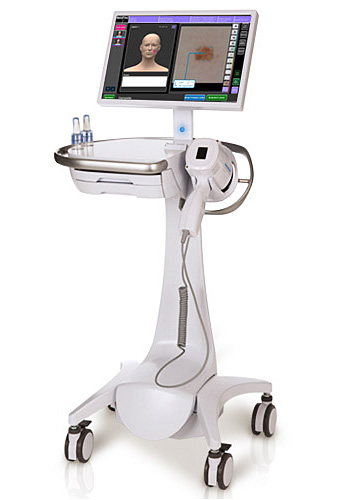
Another medical technology that I discovered while doing research for my remix project is the Mela- Find device that was just recently FDA approved and is now being implemented in Hospitals. This device is a scanner that looks at cancerous moles and protrusions in the skin to see of they are positive for melanoma. This is extremely helpful because before this device someone would have to go through a biopsy in order to test the moles for cancer and that can be expensive and leave behind nasty scars. The mela-find saves people money and unnecessary surgery by looking at the cancerous area and comparing it to over 10,000 pictures of other cancerous moles to see if the one in question is in fact cancerous. This device was created by MELA Sciences and is not meant for definitive diagnoses but can drastically cut down the amount of unnecessary biopsys. Melanoma is a really dangerous form of cancer and i think this device is pretty revolutionary. Medical technology is advancing at a rapid rate and bettering the quality of life for everyone
Prompted post #9- Diversity in Nursing
I came across an article that explains the importance of diversity in the Nursing field. Nursing is a growing field becasue without nurses a hospital cannot run properly. Doctors are an important part of hospital care but the nurses are the ones that are constantly dealing with patients are communicating with them on a more personal level. This brings up the point that hospitals are trying to diversify their nursing staff in order to relate to the patient demographics. It has been proven that people would rather be treated by someone that they can relate with because it makes them feel more safe and secure in a hospital setting. According to Veronica Vital Ph-D, Rn at the Chamberlain college of NUrsing in Arizono "It is projected that by 2050 minorities will make up 50 percent of the population in America therefor diversifying the the demographic of the nursing profession so nurses can mirror the face of the community we serve." I believe that this makes perfect sense because as i stated before people want to be treated by someone they can relate to and that means the nursing profession needs to be diversifies to fit anyone that comes into a hospital. It is also proven that people that are of the minority classes are more willing to work in areas with a minority population which means those under-represented minorities will get the help that they need and will not be shorted on medical care.
Studies show that it is pretty hard to diversify the career though based on the amount of people that enroll in nursing programs and just the fact that in the past minorities have not been nursing so trying to start that change is a work in progress. Having minorities represented in the Nursing field will lead to better relationships being built with patients and also overall trust that the patients have going up. Another thing that people are trying to put into the nursing field is the amount of rich people becoming nurses compared to middle class and poor people. Diversity is not only different minorities but also different social classes as well. Since some medical schools and nursing schools are expensive to go to many upper class people end up becoming nurses, but many universities are setting up scholarships for people attempting to become nurses from lower income areas. They want to have a diverse nursing population so patients that are apart of that social class will be able to relate better with the providers. I agree with this because usually one is more apt to relate to someone that knows what they are going through and has been in the same fiscal situation as you.
I think that diversity in Nursing is Important for all of these reasons stated and it is also stated in the article that the nursing field is looking for more males because it is mostly a female occupation. They believe that this will be good for people that are more comfortable being treated by someone of the same gender as them. And because i worked in a hospital for awhile I saw this to be true, some peoploe actually request to have a male nurse instead of a female and vice versa. I think that the diversity in nursing is getting better and will continue to improve as time goes on. Nurses are avery important part of the medical practice and without them things just wouldn't work in hospitals.
Studies show that it is pretty hard to diversify the career though based on the amount of people that enroll in nursing programs and just the fact that in the past minorities have not been nursing so trying to start that change is a work in progress. Having minorities represented in the Nursing field will lead to better relationships being built with patients and also overall trust that the patients have going up. Another thing that people are trying to put into the nursing field is the amount of rich people becoming nurses compared to middle class and poor people. Diversity is not only different minorities but also different social classes as well. Since some medical schools and nursing schools are expensive to go to many upper class people end up becoming nurses, but many universities are setting up scholarships for people attempting to become nurses from lower income areas. They want to have a diverse nursing population so patients that are apart of that social class will be able to relate better with the providers. I agree with this because usually one is more apt to relate to someone that knows what they are going through and has been in the same fiscal situation as you.
I think that diversity in Nursing is Important for all of these reasons stated and it is also stated in the article that the nursing field is looking for more males because it is mostly a female occupation. They believe that this will be good for people that are more comfortable being treated by someone of the same gender as them. And because i worked in a hospital for awhile I saw this to be true, some peoploe actually request to have a male nurse instead of a female and vice versa. I think that the diversity in nursing is getting better and will continue to improve as time goes on. Nurses are avery important part of the medical practice and without them things just wouldn't work in hospitals.
Open post #8-Exosuit
While doing research for my remix project i came across a lot of really awesome medical technology. One that i found to be really awesome was an exosuit that NASA is producing. It is still in its initial stages of development but it has the potential to be revolutionary. It is a full body exo skeleton that has the functionality of a human body. They are trying to make it so people that have disabilities with can use it to give motion to body parts that no longer work properly. It has the capability to hold its shape so that someone that cannot walk would be able to stand up straight and mve around freely with help from the exosuit.
Another reason this suit is being produced is to help astronauts stay healthier in space. Since being out of the atmosphere means there is no gravity it is possible for astronauts that spend long periods of time in space to loose bone mass and become unhealthy. The suit makes it possible for them to exercise by just walking around since the suit can provide resistance that gravity normally would. Since this is still being made it is a work in progress but is expected to be done soon. Its main purpose will be to help astronauts maintain a healthy amount of exercise for trips to far away astroids and even Mars. I'm excited to see what NASA comes up with for the finished product.

Another reason this suit is being produced is to help astronauts stay healthier in space. Since being out of the atmosphere means there is no gravity it is possible for astronauts that spend long periods of time in space to loose bone mass and become unhealthy. The suit makes it possible for them to exercise by just walking around since the suit can provide resistance that gravity normally would. Since this is still being made it is a work in progress but is expected to be done soon. Its main purpose will be to help astronauts maintain a healthy amount of exercise for trips to far away astroids and even Mars. I'm excited to see what NASA comes up with for the finished product.
Friday, March 20, 2015
Prompted Post #8- Experience in Nursing
As I have already mentioned frequently I worked at St. Johns Providence for about 7 months last year, and had a good amount of on the job training. What I found was that working in a Hospital is all about professionalism and respect for the patients. You always want to make them feel welcome and safe because nobody liked being in a hospital and all they want is to get in and get out. I worked in occupational Health so i was not seeing all the urgent care patients that had gunshot wounds and stab wounds, and other crazy types of injuries, but I have seen a good amount of cut off fingers and stitch wounds. I have seen a man that lost 3 of his fingers due to a meat slicer at work, we had to clean out the ends of his fingers and i have never seen someone in so much pain ever. We had him dip his fingers into a cleaning solution for 10 minutes and he was whimpering and screaming the whole time becasue all the nerves and the bone of his fingers were exposed to the solution.
Hands on training is way better that any type of textbooks or classes. When you are working on the job you can see what is actually happening in a hospital not just reading through a textbook and memorizing terms and things like that. There is a huge difference between sitting in a lecture hall and listening to someone talk about how to act in a hospital and actually being in a hospital and having to compose yourself to the norms of the workplace because you are actually there. IN any situation I would choose to have hands on training rather than sitting in a lecture or reading through a textbook, i do not think those techniques are nearly as effective.
Having these hands on experiences made it possible for me to see how to truly act in a hospital and what the language and attitude of nurses and doctors really is. Sure someone can tell you what to do and how to act but it makes it so much more real to actually be living it and helping the RN's with their rounds and seeing what kind of people truly come trhough the door to be treated. Also there is an amount of getting used to seeing things that might gross people out, like I mentioned earlier I could see this mans metacarpals sticking out of his skin, which is a lot different than looking at a picture of bones in an anatomy textbook. On the site training is so much more effective in teaching people what to expect in their field than any lecture could ever be and I highly suggest doing internships and volunteering before you enter any field because that is the only way to truly know what you are getting into.


Hands on training is way better that any type of textbooks or classes. When you are working on the job you can see what is actually happening in a hospital not just reading through a textbook and memorizing terms and things like that. There is a huge difference between sitting in a lecture hall and listening to someone talk about how to act in a hospital and actually being in a hospital and having to compose yourself to the norms of the workplace because you are actually there. IN any situation I would choose to have hands on training rather than sitting in a lecture or reading through a textbook, i do not think those techniques are nearly as effective.
Having these hands on experiences made it possible for me to see how to truly act in a hospital and what the language and attitude of nurses and doctors really is. Sure someone can tell you what to do and how to act but it makes it so much more real to actually be living it and helping the RN's with their rounds and seeing what kind of people truly come trhough the door to be treated. Also there is an amount of getting used to seeing things that might gross people out, like I mentioned earlier I could see this mans metacarpals sticking out of his skin, which is a lot different than looking at a picture of bones in an anatomy textbook. On the site training is so much more effective in teaching people what to expect in their field than any lecture could ever be and I highly suggest doing internships and volunteering before you enter any field because that is the only way to truly know what you are getting into.
Open Post #7- Past Experience
I recall one time when I was working at St Johns Providence when a certain patient came in that had a very interesting case. He had this abnormal bump on his elbow and it was soft to the touch but you could feel something inside of it, almost like little peices are cartiladge moving around. The nurse that I was working with and I both put gloved on and felt the protrusion that engulfed this mans entire elbow, it was about the size of a baseball, maybe even a little larger than that. I had no idea what the bump could possibly be and niether did the RN I was working with, we were both at a total loss. We asked the man how long it had been there and he Explained that it had been growing in size for about a week and that it got large enough for him to be worried so he wanted to come in and get it checked out. Since me and the RN both did not know what the soft protrusion was we brought in the Physician Assistant to check out the situation. He was also very confused by what the protrusion was and sent the man down to radiology to get some x-rays taken so that it could be further examined.
When the x- rays came back the doctor was still at a loss because the protrusions was shown on the x-ray to be hollow but one could feel something inside of his elbow. The PA expressed his opinion to drain the protrusion, but also that he was worried that this might not be the right course of action. The man throughout all of this confusion was very brave and did not seem worried at all, which I found admirable because I personally would have been freaking out the whole time if this were to be happening to me. The PA then said before we drain the protrusion I want a specialist to come and take a look at this so we can take the proper course of action. And unfortunately that was the last I saw of this particular patient. He was shipped out to another hospital and i never heard what became of the protrusion. This experience made me realize that sometimes even the doctors have no idea what the problem is and every once and a while their are extenuating circumstances where all you can do is refer the patient somewhere else. I just hope that he was ultimately okay and that he was able to get rid of that nasty bump on his elbow.
Prompted post #7 Controversy over cameras
In Illinois there is a controversy regarding putting cameras in residents of nursing homes rooms, so that they can be constantly monitored to see if anything goes wrong, and if it does they can know exactly what happened. People that are in the nursing homes are fighting for this because they believe that they are abused and neglected by workers at the nursing home. There have been over 60,000 allegations blaming staff of abusing or neglecting residents, so people want to take steps to stop this from happening. By putting cameras in the residents rooms it will stop this abuse because they will constantly be under surveillance . But according to Greg Crist, the senior vice president of public affairs for the American Health Care Association "We are infringing on someones privacy, arguably for their own good, we have to make sure its justified." (Bergal n.p) Another issue regarding this is the owners of the nursing homes are worried that employees will leave because they are being constantly scrutinized in the workplace and will not like being on camera at all times.
Many people believe that having electronic surveillance in the rooms is a huge privacy violation, especially if they are hidden cameras. People want to still be able to enjoy their privacy, but with all the complaints about neglect and abuse in assisted living centers, others are seriously trying to push the issue through legislation. Legislation has failed in many states already, but people continue to push the issue. Some believe that with consent a patient should have the right to decide whether or not to have the equipment installed in the room, but they have to take into account those that cannot consent for themselves. This means that family members would have to consent for them and that could be shaky because consent is a tricky subject. Others have suggested instead of using video cameras to just use audio equipment, but this would be less reliable in stopping abuse in the nursing homes. About 1.5 million people reside in over 16,000 nursing homes in America so the issue of paying for all the cameras also comes up. According to Crist, "The cameras should not be the end all be all for ensuring quality care" (Bergal n.p) . IN Texas they passed these laws with the requirments that the resident pay for the camera and that a sign be posted saying that electronic surveillance is being used.
I dont know if putting cameras in peoples rooms is going to stop the neglect and abuse but it is a controversy that is still being discussed and no permanent outcome has been found. http://www.pewtrusts.org/en/research-and-analysis/blogs/stateline/2014/09/25/nursing-home-cameras-create-controversyyet.

Many people believe that having electronic surveillance in the rooms is a huge privacy violation, especially if they are hidden cameras. People want to still be able to enjoy their privacy, but with all the complaints about neglect and abuse in assisted living centers, others are seriously trying to push the issue through legislation. Legislation has failed in many states already, but people continue to push the issue. Some believe that with consent a patient should have the right to decide whether or not to have the equipment installed in the room, but they have to take into account those that cannot consent for themselves. This means that family members would have to consent for them and that could be shaky because consent is a tricky subject. Others have suggested instead of using video cameras to just use audio equipment, but this would be less reliable in stopping abuse in the nursing homes. About 1.5 million people reside in over 16,000 nursing homes in America so the issue of paying for all the cameras also comes up. According to Crist, "The cameras should not be the end all be all for ensuring quality care" (Bergal n.p) . IN Texas they passed these laws with the requirments that the resident pay for the camera and that a sign be posted saying that electronic surveillance is being used.
I dont know if putting cameras in peoples rooms is going to stop the neglect and abuse but it is a controversy that is still being discussed and no permanent outcome has been found. http://www.pewtrusts.org/en/research-and-analysis/blogs/stateline/2014/09/25/nursing-home-cameras-create-controversyyet.
Sunday, March 1, 2015
Open post #6: Catching errors
A study was done at 36 hospitals in Georgia and Colorado to see how many medical errors were made by workers. In the study they used three different detectors to catch errors that were made, they are incident report review, chart review and direct observation. They evaluated each dose that was given and looked at the prescriber's order, and any deviations from the original order were to be marked errors. They observed the efficiency of each hospital by looking at how long it took to analyze each dose of medicine and make sure it was administered correctly. They also looked at how clinically significant the error was, and a panel of physician did this. When the results of the test came in, 300 of 457 pharmacists described errors being made on 2556 doses. That is about 11% errors. I found this too be really appalling because there is no way that it they should be making this many mistakes. They are doctors, that trained for a long time to do their job so I personally don't know how there would be this many mistakes being made. This makes me think that if I got a prescription for something that its likely that i'm not going to get what i was actually prescribed. I want to have faith in the medical field but studies like this one make me not want to go to a hospital. This is why i'm going to be a nurse so that I can make sure that mistakes are not happening and that everyone gets what they are actually prescribed, without any mistakes or mix ups. Each mistake made costs the hospital money and respect so i hope that this number goes down in the future because i was amazed that it was as high as it is.
This is the article for prompted post 6; http://www.nursingtimes.net/the-arguments-around-nurse-training-are-getting-louder-as-we-get-poorer/5015654.article
Prompted post #6: Nurse Training
In an article I found online, a Professor named Mark Radcliffe, is making an argument about training nurses. He is talking about how he is a teacher that is trying to prepare nursing students to be reliable in the workplace, but he is saying that hes not sure how much good he is actually doing. He believes that the way that nurses are trained should be changed. He wants the training to move away from writing essays and taking exams, to teaching people how to implement nursing practices in live situations. He believes that it would be more beneficial to teach students in a hands on way.
He is also saying that their is a problem with the content that goes into training. He agrees that nurses should get degrees but he disagrees with the track they have to take. He is says that the more money we loose the louder the arguments about nurse training gets. People that want to be nurses need to have the proper training because they are dealing with someones life, but students are heading away from it because they simply cannot afford to take all the classes they need. Students are stopping early, before they finish all the training and that is a problem because hospitals are starting to be understaffed. Mark does not provide any ways he thinks this problem will be fixed but he is bringing it to light because he is a nursing professor and he disagrees with the way things are going. He does not think that a nursing student should start to learn how to use a drip 5 months before he is certified, he should learn it much sooner than that.
This article scares me a little bit because I am going to be going down that road soon and i do not want to have to stop because I cannot afford to go to school. But I also agree with Mark because nurses do need the proper training in order to be help responsible for other peoples lives, There is no way around the training, its just a part of the job, I do however think it sucks for those people that could not finish their training and are left with almost knowing what they need for their job, but still falling short. I overall agree with Mark and think that the training that nurses undergo should be revised.
He is also saying that their is a problem with the content that goes into training. He agrees that nurses should get degrees but he disagrees with the track they have to take. He is says that the more money we loose the louder the arguments about nurse training gets. People that want to be nurses need to have the proper training because they are dealing with someones life, but students are heading away from it because they simply cannot afford to take all the classes they need. Students are stopping early, before they finish all the training and that is a problem because hospitals are starting to be understaffed. Mark does not provide any ways he thinks this problem will be fixed but he is bringing it to light because he is a nursing professor and he disagrees with the way things are going. He does not think that a nursing student should start to learn how to use a drip 5 months before he is certified, he should learn it much sooner than that.
This article scares me a little bit because I am going to be going down that road soon and i do not want to have to stop because I cannot afford to go to school. But I also agree with Mark because nurses do need the proper training in order to be help responsible for other peoples lives, There is no way around the training, its just a part of the job, I do however think it sucks for those people that could not finish their training and are left with almost knowing what they need for their job, but still falling short. I overall agree with Mark and think that the training that nurses undergo should be revised.
Sunday, February 22, 2015
Free post #5: Cigarettes
Everyone knows that cigarettes are bad for you and it makes sense that people should not smoke them, but in reality the demand for cigarettes is very high. While looking through the medical new today I found an article relating to cigarettes and that they are thinking about modifying them.The goal is to change the nicotine content level in cigarettes as well as modifying the filtration and size of the product. Overall these modifications are leading to a delcine in overall consumption of tobacco products which is a good thing. The question to be asked in this situation is what is making consumers stop smoking cigarettes. It could be the modifications being made to the product or for reasons regarding health directives and personal safety. It is true that smoking is terrible for your body and can destroy ones lungs and lead to more serious health problems. It is interesting that people know that they will kill them one day but still continue to smoke. It could be because they are used as a stress relief or just because people made it part of their daily routine. It is a strange phenomena that people will do something that directly makes your health worse. over a billion people in the world smoke and I think this is an interesting thing to contemplate.. Human nature is a funny thing and as a nursing major I concern myself with other peoples safety. I read through the article and learned that cigarrete consumption had been declining which I found to be a good thing. Source
Thursday, February 19, 2015
Prompted post 5: Nursing Student Association
Here at Michigan State University there is an organization called the Nursing Student Association. This club can be extremely helpful to nursing students at the university. It is actually required to be a member of this club once you are excepted into the nursing school here. This club has monthly meetings and i attended the one on February 18th this month.
I did not end up joining the club at the end of the meeting only because it costs 10 dollars to become a legit member and i did not have any money on me at the time. But it is basically just a meeting for all the nursing students where they go over different things about the medical field. They touch on subjects regarding procedures and most importantly different opportunities for students to volunteer at different hospitals. This is a really great way for nursing students to get experience in their field and also to get some volunteer hours for their nursing applications. They also had a guest speaker come in and explain a little about what he does on an average day at work. This is also interesting because it brings in someone who has real world experience to explain what actually goes down to those who have never worked in a hospital setting. I had my internship before so I knew some of the stuff that they were talking about but I also learned some things about being a nurse practitioner as well. This isn't the field of nursing that I am trying to join but i thought it was interesting listening to a professional talk about his career.
The main purpose of this student organization is to get nursing students volunteer hours and to help pre-nursing students with applications. They also put on different community service opportunities that are not necessarily related to nursing such as events at nursing homes and things of that nature. I enjoyed the experience because it also gave me a chance to see what kind of people are in the nursing program and also to meet other people with the same major as me. Its always really nice to meet people that have a lot of the same classes as you so you are able to study with people and learn the material better. It also kind of scared me because there were a lot of people there and all the pre-nursing students are in competition with each other so that was a little nerve wrecking. Other than that I thought it was beneficial to attend the meetings and i will definitely join this club not only because it is required but also because they provide a lot of great opportunities for working in a hospital. I also found that it represented the truth of the nursing field very well by supplying those real world experiences and also providing so many opportunities to get real time experience. The NSA is a really awesome club here at Michigan State and if you are a medical student at all I would recommend looking into it.
I did not end up joining the club at the end of the meeting only because it costs 10 dollars to become a legit member and i did not have any money on me at the time. But it is basically just a meeting for all the nursing students where they go over different things about the medical field. They touch on subjects regarding procedures and most importantly different opportunities for students to volunteer at different hospitals. This is a really great way for nursing students to get experience in their field and also to get some volunteer hours for their nursing applications. They also had a guest speaker come in and explain a little about what he does on an average day at work. This is also interesting because it brings in someone who has real world experience to explain what actually goes down to those who have never worked in a hospital setting. I had my internship before so I knew some of the stuff that they were talking about but I also learned some things about being a nurse practitioner as well. This isn't the field of nursing that I am trying to join but i thought it was interesting listening to a professional talk about his career.
The main purpose of this student organization is to get nursing students volunteer hours and to help pre-nursing students with applications. They also put on different community service opportunities that are not necessarily related to nursing such as events at nursing homes and things of that nature. I enjoyed the experience because it also gave me a chance to see what kind of people are in the nursing program and also to meet other people with the same major as me. Its always really nice to meet people that have a lot of the same classes as you so you are able to study with people and learn the material better. It also kind of scared me because there were a lot of people there and all the pre-nursing students are in competition with each other so that was a little nerve wrecking. Other than that I thought it was beneficial to attend the meetings and i will definitely join this club not only because it is required but also because they provide a lot of great opportunities for working in a hospital. I also found that it represented the truth of the nursing field very well by supplying those real world experiences and also providing so many opportunities to get real time experience. The NSA is a really awesome club here at Michigan State and if you are a medical student at all I would recommend looking into it.
Sunday, February 15, 2015
Open Blog Post #4: Prosthetic
I am currently writing a paper about Microsoft's involvement in prosthetics . It is actually a rather interesting topic considering how much of a breakthrough technology prosthetic limbs really are. If you think about it its pretty crazy that we can make a fake body part that functions almost the same as the original. I think it is really awesome technology and it has helped thousands of people in the world. I'm writing my paper based of Microsoft's commercial at the Superbowl about Braylon O'Neill. It is about a young boy that was born without the bones in his legs therefore he has been using prosthetics for his entire life. The commercial in my opinion is very powerful and uplifting because it shows the young boy playing sports and running like any other kid that age which is really awesome. Microsoft's role in helping with this technology comes with tracking the gait mechanics of people being fitted for prostheses. They use the Kinect system (similar to the one used with Xbox one)to track the patients movements so they can judge how to create the arm or leg or whatever body part they are making at the time. The Kinect system will create a 3-D structure of the human body and use this to analyze the patients motions to properly adjust for that persons specific gait mechanics. It is relatively simple and cheap technology which is a breakthrough in of itself because prior to the Microsoft Kinect gait tracking was expensive and rare. Plus the equipment itself was large and clunky, the Kinect method is a whole lot more efficient. It is true that they still have a ways to go until it is a foolproof system but for now the Kinect system is helping thousands around the world be fitted for prostetics. Its giving people a chance to experience things that they thought they might never again, which is why I think this is such a great breakthrough. I never knew that this was how prosthetic's were fitted for patients so it was definitely interesting to look into.
Prompted post #4: Professional vs non- professional
There are some vast differences in the audience of a professional article and a non professional article. In my search I found two articles both written by people with PhD's but the difference lies in where they posted their articles. One of them is posted on a medical journal site called JAMA, which stands for the Journal of the American Medical Association. Anyone can find this website so the audience here is pretty broad, but really only includes educated people. A common civilian probably would not be reading an article about ethical guidelines that a doctor should follow. Although this article is definitely easier to find online i believe that it is still a pretty professional article. It touches on issues concerning the origin of medical practice and also the ways that is should be practiced now. The language in this first article is relatively simple to read, the writting is not written in a way that makes it overly complex and if you were to come across it, you might be able to read it rather effortlessly. The article itself is pretty lengthy but it is laid out nicely and the paragraphs run smoothly. This is is why I am labeling this as a non professional article even though it is on a medical site and written by a doctor it still seems like the point of this paper is to inform the general public about medical practices.
The other article I am comparing this too was actually something from my biology class. IN class we had to look over a medical journal entry about prions, and it was really complex. It was written in a Clinical Neurology and Neurosurgery article, so this tells me that the audience was for people performing surgeries. The entire entry is really complex and half the words are too difficult to even pronounce correctly. The papers main focus is to provide insight about M232R prion disorders, and the causes and effects of it. There are pictures of the brain throughout the article and different x- rays that were taken during the case. It is talking about an actual surgery that took place on a women from Japan, which means that only doctors are really looking at this paper. (And lost kids in biology classes). Based on the language and what the paper talks about it is easy to see that this one is a lot more complex and therefor more professional in my opinion. It is explaining a surgery so that other doctors can know how to approach a rare disease like any type of prion malfunctioning. SO by looking at the language and the point of writing you can see that these are both scholarly articles but one is far more professional than the other.
Article 1
Article 2
(If the second link doesn't work its because it goes to d2l)
Sunday, February 8, 2015
Open post #3:Disease Spreading
The nursing community posts articles on line about how to better practice nursing and to keep procedures up to date. Today I read an interesting article about how infections spread in hospitals. According to research conducted by the Center for Disease Control(CDC), there is a significant amount of patients that contract diseases while at a hospital. About 1 out of every 25 people conduct some sort of infection while already in a hospital. The most common ways for this to happen "include central line-associated bloodstream infections (CLABSIs), catheter-associated urinary tract infections (CAUTIs), surgical site infections (SSIs), Clostridium difficile (C. difficile) infections, and methicillin-resistant Staphylococcus aureus (MRSA) bacteremia bloodstream infections" (nursezone.com). I never knew that in hospital infections were such a prominent thing and it is pretty scary to think that 1/25 people contract something. A hospital is supposed to be where you get better now contract more diseases. According to the article the RN is the first line of defense against spreading disease, and the best way to do this is by always checking up on patients and using the cleanliest way of doing everything. Always using fresh equipment and gloves and cleaning off any surface that you are injecting or cutting thoroughly. Hopefully as technology in the medical field advances this will become less of a problem, and hospitals can get back to help instead of infecting.
link
link
Wednesday, February 4, 2015
Prompted Post #3:Interview with an Registered Nurse
When I was working at St. Johns Providence hospital I worked under an RN named Shay, and I decided to do my interview with her. I conducted the interview via phone because she obviously does not live in East Lansing. I had prepared a series of questions for her including things like if she liked her job, what she had to do to get there and how long she had been doing it, along with the required questions about the misconceptions in her field.
I started off the interview by asking if she enjoyed the job that she did. She works in occupational health at the moment and she stated that she enjoys occupational health because it is not as intense as the work she was doing in urgent care, or the emergency room. She continued on to say that when she was working in those more intense areas of the hospital she was younger and more willing to put in the long, late hours, but now that she is older and in her last year before retirement she really does like to work her structured hours in a less intense environment. Considering that occupational health is usually people that need physicals for work or drug tests, its a pretty lax department. I then asked her what she had to do to become a registered nurse. She explained that when she was becoming a nurse it was a lot less intense of a process. She said that back in her day she didn't even go to college she just went straight to nursing school for 2-3 years(her exact words)and came out a nurse. This made me a little upset just because here at Michigan State the nursing program is extremely competitive and becoming an RN is no easy feat anymore. I then went on to ask her about the common misconceptions of the job. She stated that a lot of people think that being a nurse is an easy job but most of the time the nurses do more work in a hospital than anyone. Also she said that people often think that working at a hospital means that everyone that walks through the door has some sort of deadly disease or something but most of the time its only for check-ups or minor issues. She said that people watch to many shows like "House" and "ER" but that is not actually how a hospital works.
My next question had to do with how communication is important in a hospital. Shay said that it is one of the most important things in a hospital setting. She talked about how if the RN's do not communicate well with the patients than it could be hard to find out what is wrong with the person. Also if the nurse does not communicate what the patient said to the doctor than it could cause confusion. On top of that since she works in occupational health she always has to communicate the results of drug tests and physicals to whatever job sent the patient to get the tests. Overall she said that without communication a hospital would not run smoothly at all. That was the last question I asked her because I was not exactly sure what the "ask her what they write and how they write it" question meant. I learned that becoming a nurse is a lot more difficult now than it was back when Shay was starting off , but that just means that I need to work harder to achieve my goals.
I started off the interview by asking if she enjoyed the job that she did. She works in occupational health at the moment and she stated that she enjoys occupational health because it is not as intense as the work she was doing in urgent care, or the emergency room. She continued on to say that when she was working in those more intense areas of the hospital she was younger and more willing to put in the long, late hours, but now that she is older and in her last year before retirement she really does like to work her structured hours in a less intense environment. Considering that occupational health is usually people that need physicals for work or drug tests, its a pretty lax department. I then asked her what she had to do to become a registered nurse. She explained that when she was becoming a nurse it was a lot less intense of a process. She said that back in her day she didn't even go to college she just went straight to nursing school for 2-3 years(her exact words)and came out a nurse. This made me a little upset just because here at Michigan State the nursing program is extremely competitive and becoming an RN is no easy feat anymore. I then went on to ask her about the common misconceptions of the job. She stated that a lot of people think that being a nurse is an easy job but most of the time the nurses do more work in a hospital than anyone. Also she said that people often think that working at a hospital means that everyone that walks through the door has some sort of deadly disease or something but most of the time its only for check-ups or minor issues. She said that people watch to many shows like "House" and "ER" but that is not actually how a hospital works.
My next question had to do with how communication is important in a hospital. Shay said that it is one of the most important things in a hospital setting. She talked about how if the RN's do not communicate well with the patients than it could be hard to find out what is wrong with the person. Also if the nurse does not communicate what the patient said to the doctor than it could cause confusion. On top of that since she works in occupational health she always has to communicate the results of drug tests and physicals to whatever job sent the patient to get the tests. Overall she said that without communication a hospital would not run smoothly at all. That was the last question I asked her because I was not exactly sure what the "ask her what they write and how they write it" question meant. I learned that becoming a nurse is a lot more difficult now than it was back when Shay was starting off , but that just means that I need to work harder to achieve my goals.
Sunday, February 1, 2015
Open Post #2: Injury Prevention for Inpatients
While scrolling the internet I came across and interesting article about different things that registered nurses have observed help inpatients from falling and injuring themselves even more. Most inpatients have declining health issues so support from hospital staff is what keeps them going. The nurses cannot be with the patient for their entire stay though, so a study was conducted at 5 hospitals to identify ways to prevent in hospital injuries. The study was done in the general area of the hospital and in the surgical area of the hospital. The researcher found that the number one best thing to do to stop inpatient injury is to always keep the brakes on their beds locked. If a patient is injured and cannot move and their bed starts rolling it can potentially rip I.V's out, hurt other patients and or themselves. It is also mentioned that keeping heavy equipment out of the patients way and removing clutter are good ways to avoid injury. Also the study said that doing a mental capacity test daily will keep patients that are just sitting in their bed all day on their toes and mentally aware of what is going on. Keeping non-slip foot wear on patients is also an extremely good idea, something like slippers that are soft on the inside but padded for grip on the bottom are the optimal choice for inpatients. It is actually very easy for inpatients to hurt themselves that is why having handrails in a hospital helps people that are still weak on their feet to get around. Making sure that their beds are low to the ground is also smart for two reasons, the first is so that they can easily get into the bed, the second is if they manage to fall off the bed it will not be a far drop. This particular statistic was mentioned by both the surgical team and the medical team, so even something simple like the height of a bed can be important in helping patients. I personally did not know these types of things were important before looking at this study, so I find that pretty interesting. I never thought about how hard it is for people with declining health to move around so it makes sense that these things need to be done to prevent further injuries. If you want to see the statistics of this study the link is hyperlinked here.
Thursday, January 29, 2015
Prompted Post #2: Code Of Ethics
Hospitals have a very specific code of ethics that they base their health care tactics on. A hospital setting is a very proffesional sphere therfore following ethical codes is required. Most people already do not want to be in a hospital as it is so it is extremely important to make the patients feel welcome and comfortable and most importantly that you and the rest of your staff is going to make them feel better. In my personal belief nurses and caregivers should always be respectful to eachother and to the patients, and also make sure to dress appropriatly. Nurses should always be wearing scrubs when they are practicing on patients in order to abide by the cleanliness standards of a hospital. Besides how one dresses it is also important to watch what you are saying to patients and other caregivers. You do not want to be joking around in a hospital becasue it is a serious setting and people are in pain behind every door, so you dont want that to be taken lightly. My personal beliefs mainly focus on staying profesional and making sure that the patients needs come before my own.
I did some research on the code of ethics of different hospitals and I found one that aligned with my own personal beliefs. The code of conduct for St John of God, Ballarat Hospital is a really good indicator of why it is important to act professional in a hospital. It lays out the things that should not be done at a hospital such as throwing equipment, inappropriate jokes to patients, especially racial slurs, dishonest behavior and the list goes on. I thought an interesting thing on their code of conduct was the fact that not being able to work as a team is against their code. I believe that in medicine working as a team and collaberating with others is absolutely necessary and I like how failing to do so is frowned upon in a hospital setting. Also their list touches on dressing appropriatly as well and not showing too much skin and other things of that nature. Again I think this is important just for sanitation purposes. Another one that I found to be extremely imporant is not criticising health care professionals in front of others. This is important because if the patient ever feels like the doctor /nurses made a mistake it could make them feel unsafe and they would probably not want to return to that hospital again. The code of ethics in a hopital is truly of the utmost importance.
I think that people expect to be treated a certain way when they walk into a hospital for health care. They want to be respected and treated as an important patient. They may not know the exact code of ethics but they deffinetly know how they want to be treated in a hospital setting. This is why it is even more important for health care proffesionals to follow their code of ethics. Not only for the patients sake but also for their own sake becasue failure to follow ethics can lead to being reported to the directors and could end up in job termination. Hospitals are a place that needs to function smoothly because when it comes to saving lives their is no short cut.
I did some research on the code of ethics of different hospitals and I found one that aligned with my own personal beliefs. The code of conduct for St John of God, Ballarat Hospital is a really good indicator of why it is important to act professional in a hospital. It lays out the things that should not be done at a hospital such as throwing equipment, inappropriate jokes to patients, especially racial slurs, dishonest behavior and the list goes on. I thought an interesting thing on their code of conduct was the fact that not being able to work as a team is against their code. I believe that in medicine working as a team and collaberating with others is absolutely necessary and I like how failing to do so is frowned upon in a hospital setting. Also their list touches on dressing appropriatly as well and not showing too much skin and other things of that nature. Again I think this is important just for sanitation purposes. Another one that I found to be extremely imporant is not criticising health care professionals in front of others. This is important because if the patient ever feels like the doctor /nurses made a mistake it could make them feel unsafe and they would probably not want to return to that hospital again. The code of ethics in a hopital is truly of the utmost importance.
I think that people expect to be treated a certain way when they walk into a hospital for health care. They want to be respected and treated as an important patient. They may not know the exact code of ethics but they deffinetly know how they want to be treated in a hospital setting. This is why it is even more important for health care proffesionals to follow their code of ethics. Not only for the patients sake but also for their own sake becasue failure to follow ethics can lead to being reported to the directors and could end up in job termination. Hospitals are a place that needs to function smoothly because when it comes to saving lives their is no short cut.
Sunday, January 25, 2015
Open Blog post #1
My first open post is going to be about how I got into the nursing field and what I want to do in it. In my senior year of high school I got an internship at a hospital called St. Johns Providence. In was an urgent care and I worked on the first floor in occupational health. I would go in everyday for about 4 hours and help the other nurses take care of patients. I learned a lot of really cool things their and really felt like I was a registered nurse. They would let me bring patients in and take their vitals, I would get their height and weight then take them over to a board with different letters for a vision test. I learned that when performing a pre physical one must check vitals, then perform a vision test for color, distance and depth. Next was an audiogram which is used for hearing and after they did that I would hand them off to the Physician Assistant and I would be done. It was always very important at the hospital to wash your hands a lot and always wear gloves to make sure everything stays really clean and in tip top shape. It was really awesome to help out at the hospital and I felt like I was learning how to do everything really well. All the nurses I worked with where very nice and super helpful, always showing me little tricks and tips for things like getting blood pressures and things of that nature. Another thing they had me do a lot was drug testing. Since it was occupational health many people had to drug test for their companies, and it was a fairly simple procedure. You always had to make sure people were not bringing in fake pee or anything of that nature so you had to make them empty their pockets before they went in the bathroom. They even made us take the soap out of the bathroom until I would have the sample in my hand. We would have to wait for the temperature strip to show that the urine was the right temperature before I would put it into the machine. It was easy because the machine I put it into would test it on the spot then send the results to whatever company needed them so I never had to do too much computer work. This experience really helped solidify what I wanted to go into in college and was a great opportunity to learn basic nursing skills. I will volunteer again at a hospital when I have the time because I also need the hours for applying to nursing school. I think it will help me grow into a better nurse if I spend more time in a hospital setting and learning in a hands on sort of way.
Prompted Blog post #1
The medical field is one of the most important areas of work to be in. Not only do doctors save lives on a daily basis they are always researching to find new cures and anti-bodies. A common misconception about the medical field is that the doctors are the most important people. A medical staff consists of both doctors and nurses, and those nurses are not to be undermined. The nurses do a lot of work such as prepping patients, running diagnostics, doing physical exams and making the patient feel comfortable and safe while they are in the hospitals care. A hospital is a professional setting and therefor the nurses and doctors are always business like and respectful to each other and patients. Part of a nurses job is to make the patients feel welcome because most people do no want to be in a hospital at all. This means that along with being professional nurses must also be cheerful and friendly, and always have a smile on their faces.
In addition to always being kind and caring a nurse must also be smart and know many things about the human body. The body is an extremely complex unit and being able to understand it and put that knowledge into practice on a patient is no easy feat. In my quest to learn more about the field of nursing I picked up an anatomy textbook and began looking through it. Inside I saw many pictures and diagrams of different parts of the body and on each picture their were tons of labels showing all the different pieces that make up a specific region of the body. It was a little overwhelming to look through the book and see just how many parts it takes to build a hand or a foot, even something that seems relatively simple like your finger, still has bone, skin, blood vessels, fat, and all these different parts. This just shows how much knowledge a nurse has to retain in order to help people and save lives. A textbook on anatomy is an extremely helpful resource to use to learn more about the medical field and to understand the human body, but in my opinion hands on learning is far better. When you are actually working in a hands on environment it is way easier to retain information than just looking at a textbook. By flipping through the textbook I just started to realize why the medical field has so much schooling involved with it because their truly is a lot of information that needs to be known before you can start putting your knowledge to work on actual people. Until I know the human anatomy better I would not trust myself in an operating room or anything like that. All and all the only way to really learn all the different parts of the body would be by using a textbook though because you can not see the inside of the body, so the textbook is a wonderful resource still.
In addition to always being kind and caring a nurse must also be smart and know many things about the human body. The body is an extremely complex unit and being able to understand it and put that knowledge into practice on a patient is no easy feat. In my quest to learn more about the field of nursing I picked up an anatomy textbook and began looking through it. Inside I saw many pictures and diagrams of different parts of the body and on each picture their were tons of labels showing all the different pieces that make up a specific region of the body. It was a little overwhelming to look through the book and see just how many parts it takes to build a hand or a foot, even something that seems relatively simple like your finger, still has bone, skin, blood vessels, fat, and all these different parts. This just shows how much knowledge a nurse has to retain in order to help people and save lives. A textbook on anatomy is an extremely helpful resource to use to learn more about the medical field and to understand the human body, but in my opinion hands on learning is far better. When you are actually working in a hands on environment it is way easier to retain information than just looking at a textbook. By flipping through the textbook I just started to realize why the medical field has so much schooling involved with it because their truly is a lot of information that needs to be known before you can start putting your knowledge to work on actual people. Until I know the human anatomy better I would not trust myself in an operating room or anything like that. All and all the only way to really learn all the different parts of the body would be by using a textbook though because you can not see the inside of the body, so the textbook is a wonderful resource still.
Subscribe to:
Comments (Atom)